
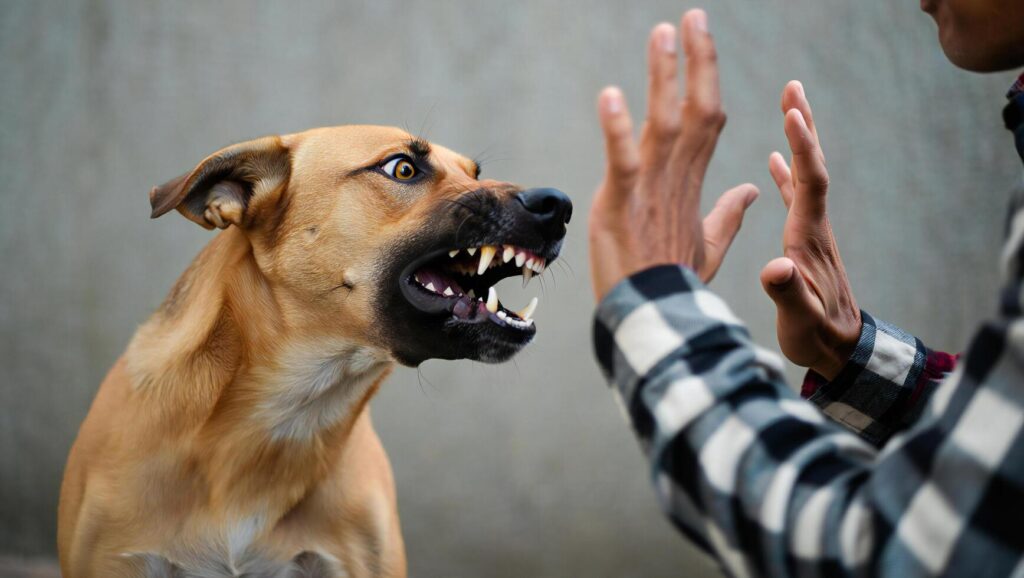
When a person is injured by a domestic animal, they can sue the owner of the domestic animal without necessarily proving fault (negligence). This in law is called strict liability and the action is called the actio de pauperie. To succeed the plaintiff must prove the following:
- That the ownership of the animal vested in the defendant at the time of the damage. It is not sufficient that the defendant had possession or control of the animal.
- That the animal is a domestic animal. This is interpreted widely to include dogs, horses, cattle, mules and bees.
- That the animal acted contrary to the nature of a domestic animal (contra naturam sui generis) when inflicting the damage. A dog that bites, a cow that gores and a horse that kicks acts contrary to the nature of a domestic animal. The owner is not liable where the animal does not act spontaneously but acts as a result of external stimuli for example where it is provoked by another animal.
- That the plaintiff was lawfully at the location where the injury occurred.
Where one is not sure whether they will be able to prove some of the requirements, for example that the defendant is the owner, it is advisable to also sue in the alternative based on the actio legis Aquiliae by proving negligence.
The contents of this article are for general information purposes only and do not constitute our legal or professional advice. We accept no responsibility for any loss or damage of whatsoever nature which may arise from reliance on any of the information published herein.
Copyright © Marume & Furidzo Legal Practitioners 2026